Foundation Drainage in Seattle

Typical cost in Seattle

  • Inside drain along one wall, about 30 ft, no sump pump$1,500 – $3,800+
  • Inside drain around the whole perimeter, with a sump pump$7,000 – $18,000+
  • Outside footing drain, one side about 30 ft$3,000 – $4,000+
  • Outside footing drain, whole perimeter$12,000 – $16,000+

Water behaving badly around a house shows up as damp crawlspaces, wet basement walls, mushy slopes or drains that no longer drain. Seattle Top Foundation Repair starts by finding where that water enters the picture, and chooses the remedy only after.

Seattle, Bryn Mawr-Skyway and White Center are the places we serve. Drainage on a house of any age may have aged or been altered, so testing what still functions is part of the visit.

Request a free quote
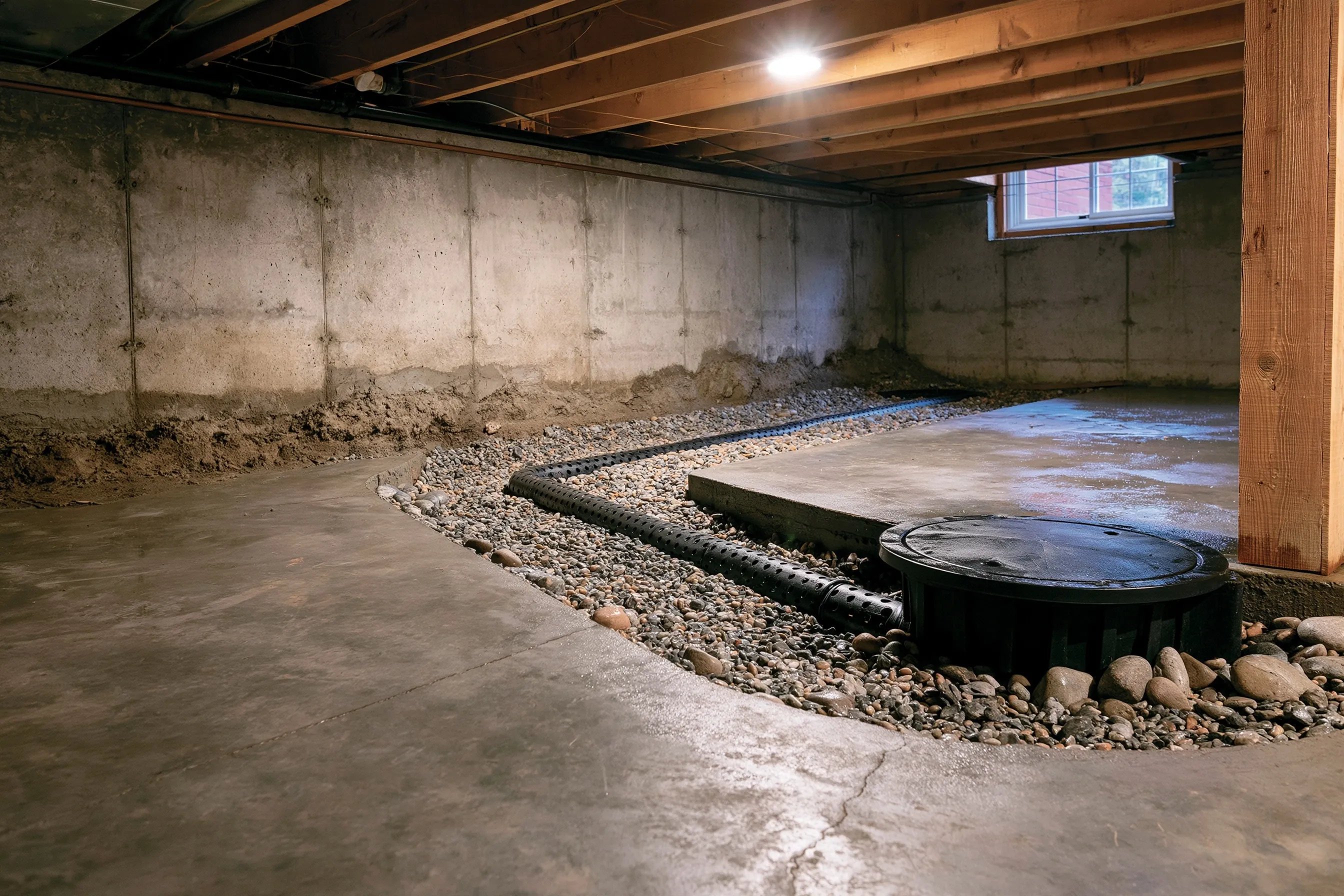
A perforated black drain pipe laid in gravel along the foot of a concrete basement wall, running to a round black sump basin set into the floor

Where water gets managed

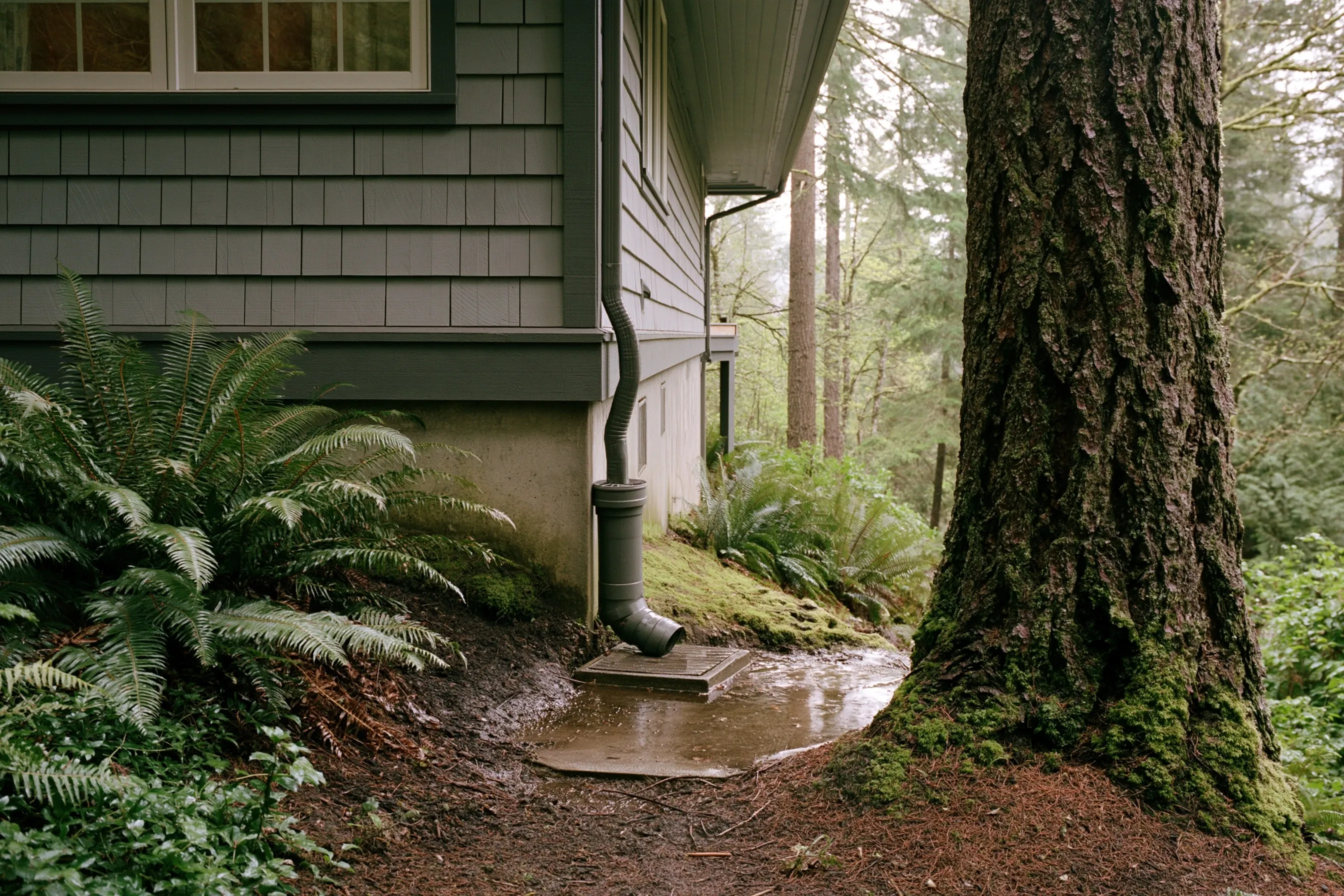
Gutters, downspouts and grading

Surface water comes first. If soil pitches toward the house, gutters overflow or a downspout ends at the wall, the foundation takes the runoff. HUD’s rehab guide leads its drainage advice the same way: grade the ground so surface water is led away from buildings.

Outside footing drain

Gravel at footing level around a perforated pipe on the outside of the foundation intercepts water and conveys it off. Digging along the wall is required to reach the footing, so working room is part of the price.

Inside drain and sump

Water already at the wall can be caught from the dry side: a drain runs along the foot of the basement or crawlspace wall and a sump basin holds what it collects for removal.

Water at the foundation

University of Minnesota Extension names three causes of wet basements. One is ground that fails to slope away from the house; another is weak gutters and downspouts; the third is subsurface drainage that is missing or has failed.

HUD adds a structural angle. Standing water can flush fine particles from beneath a footing and push on the wall, so persistent damp can be a settlement and cracking matter, not just a wetness one.

Footing drains inside and outside

HUD cautions that existing footing drains may be too small or not working. To test an old one, trace where it discharges and, if required, send a camera through it; it may be blocked or crushed.

Choosing between the two comes down to the wall, the access and where the water originates. Outside means excavating but treats water at the footing; inside avoids excavation and manages what has reached the wall.

Before anyone digs

Low-cost checks come ahead of any digging: gutters cleared, downspouts lengthened, soil confirmed to fall away from the walls. On a sloped lot, follow the water past the downspout to see where it ends up.

A downspout may connect to an old underground line. We trace where it goes before adding more water to it.

Seattle rules on digging near a slope

SDCI’s permit pages require a pre-application site visit for anyone disturbing more than 750 square feet of land, or any land on a site with an ECA. A trench around a foundation disturbs land, so a drain job on an ECA lot should be raised with SDCI before digging.

They also say foundation alterations in a steep slope area, or within 15 feet of the upper or lower edge of one, need an exemption, relief or small project waiver approved before the permit application, or a land use permit. Whether a footing drain counts as a foundation alteration is SDCI’s call. Ground cover and moisture inside the space are covered on the crawlspace page.

What changes the cost

Drainage is priced from the system. The drivers:

  • Whether the drain runs inside or outside, and how much of the perimeter it covers
  • Footing depth and how hard it is to dig beside it
  • Where the water can be discharged
  • Gutter and downspout repair or extension
  • Paving, planting and fences that must be moved and restored
Downspout emptying onto a splash block at a house corner, with water pooled against the foundation on a sloped lot

Questions and answers

How do I know I need a footing drain?

Water lying beside the wall after rain, a crawlspace with moisture on the ground or a wall that stays damp are the cues. Tracing the source comes before any drain is recommended.

Inside drain or outside drain?

Both can be right. The outside drain works at the footing but needs excavation; the inside one is installed from the dry side. Access and the water’s source pick the winner.

Will drainage close my cracks?

No: a drain deals with water, which HUD connects to settlement and wall loading, but a crack already formed stays where it is. Foundation crack repair covers those.

Soil softened beneath the footing is foundation settlement and piering territory, while damp timber higher up is crawlspace post and beam repair. The home page lists all five services.

Request a free foundation repair quote

Crawlspace, basement wall or yard: where is the water? We'll get back to you soon with an estimate or any questions we have. Estimates are free and there's no obligation.

Call (206) 717-8636

Call (206) 717-8636